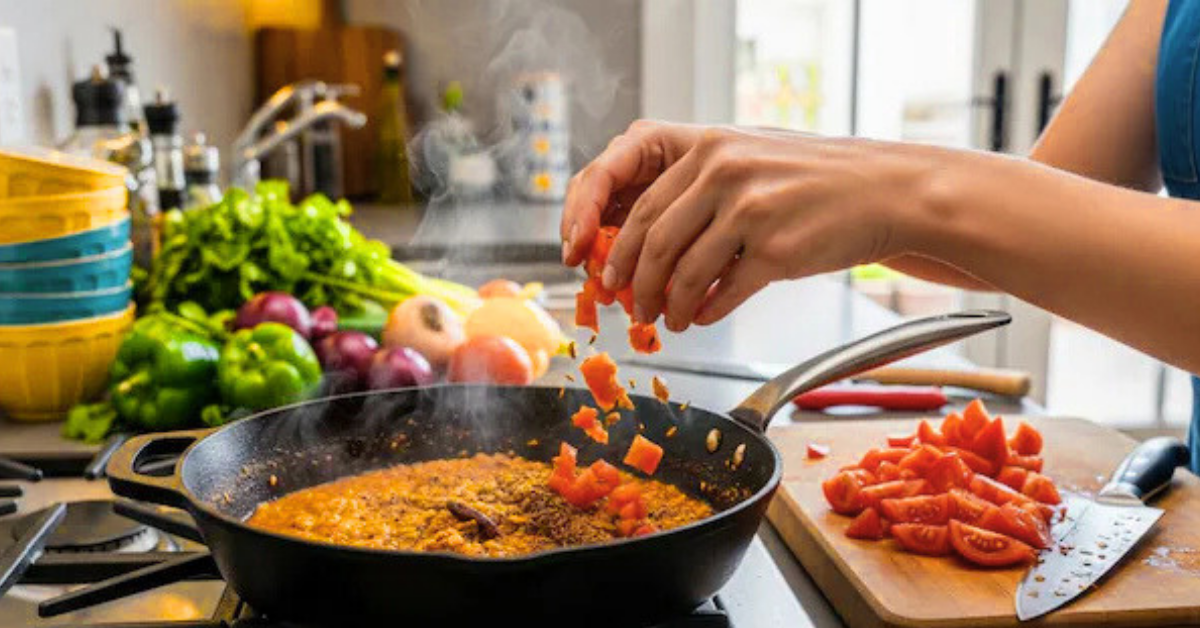
Every Indian kitchen has one common hero—tomatoes. Whether it’s a tangy curry, a simple dal tadka, or a spicy sabzi, tomatoes often find their way into the pan. But here’s the catch: if you’re in the habit of tossing tomatoes into hot oil right at the beginning, you may be ruining the taste and texture of your sabzi without even realising it.
Cooking is all about timing, and when it comes to tomatoes, timing can make or break your dish. Let’s dive into why adding them too early can cause problems, and how you can fix this common mistake.
The Science Behind Tomatoes in Cooking
Tomatoes are naturally rich in acids and moisture. While these qualities are what give them their signature tanginess and juiciness, they also interfere with the cooking process.
When added at the beginning:
- They release water which slows down the cooking of onions, garlic, and spices. Instead of caramelising and turning golden, onions stay pale and undercooked.
- The acid weakens spices like turmeric, cumin, and coriander, preventing them from releasing their full aroma.
- Vegetables take longer to soften, especially hardy ones like potatoes, beans, or cauliflower, as the acidic environment delays their cooking.
The result? A dish that tastes flat, looks less appealing, and doesn’t have the depth of flavour you expected.
Why Timing Matters
A well-cooked sabzi depends on building layers of flavour:
- Heat oil and let whole spices splutter to release fragrance.
- Add onions, garlic, or ginger and cook until golden for sweetness and depth.
- Add powdered spices next, letting them roast in oil to develop earthy richness.
- Only then, introduce tomatoes to balance the flavours with acidity and moisture.
By following this order, your sabzi develops the perfect base (masala) that clings beautifully to vegetables. If tomatoes go in too soon, the base remains weak, watery, and unbalanced.
Common Sabzis Where Early Tomatoes Spoil the Taste
- Aloo Gobi: Tomatoes added too early make the cauliflower soggy instead of crisp.
- Bhindi Masala: The acidity of tomatoes makes okra slimy if not cooked first.
- Chole or Rajma: Adding tomatoes before roasting onions and spices results in a thin, under-flavoured gravy.
- Mixed Veg Sabzi: Early tomatoes prevent root vegetables from softening properly.
The Right Way to Add Tomatoes
- Cook your onions fully first. They should be golden brown before you move on.
- Roast powdered spices in oil or ghee to enhance their flavour.
- Add tomatoes next and cook until they soften and release oil—this step ensures the tangy base blends instead of dominating.
- Add vegetables last, letting them absorb the masala evenly.
This sequence not only fixes the problem but also elevates your sabzi to restaurant-style quality.
A Quick Kitchen Tip
If you need a quicker method and don’t want to risk raw flavours, try using tomato purée or paste. Add it only after the onions and spices are done, and cook until the oil separates from the masala. This ensures your dish gets all the tomato flavour without the watery mess.
Tomatoes are an essential part of Indian cooking, but when you add them makes all the difference. Tossing them into the pan too early might be the silent reason your sabzis lack flavour, texture, and richness. By holding off until onions and spices have done their job, you’ll notice a remarkable improvement in your everyday cooking.
So the next time you cook, remember: timing isn’t just important in life—it’s just as crucial in your sabzi!